

In today’s digital landscape, two distinct approaches vie for attention—Digital Marketing and Performance Marketing. Although both leverage online channels to drive business growth, they differ in focus, execution, and measurable outcomes. In this post, we explore these differences, discuss key metrics and channels, and highlight real-world case studies that illustrate how these strategies work in practice.
Introduction to Digital & Performance Marketing
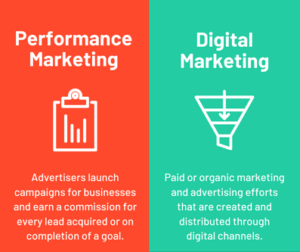
Digital Marketing encompasses a broad range of activities aimed at building brand awareness, engaging audiences, and driving customer acquisition through channels such as SEO, social media, email, content, and paid advertising. Its long-term focus lies in creating an emotional connection with consumers and establishing a robust digital presence.
In contrast, Performance Marketing is a data-driven subset of digital marketing. It centers on generating immediate, measurable results—such as clicks, leads, and sales—with advertisers paying only for successful actions. This approach is particularly attractive for businesses seeking rapid, ROI-driven outcomes.
For companies determining the right marketing mix, understanding the nuances of both methods is essential. In many cases, an integrated approach that leverages digital marketing’s broad brand-building power with performance marketing’s direct conversion tactics can yield the best results.
Key Differences Between Digital & Performance Marketing
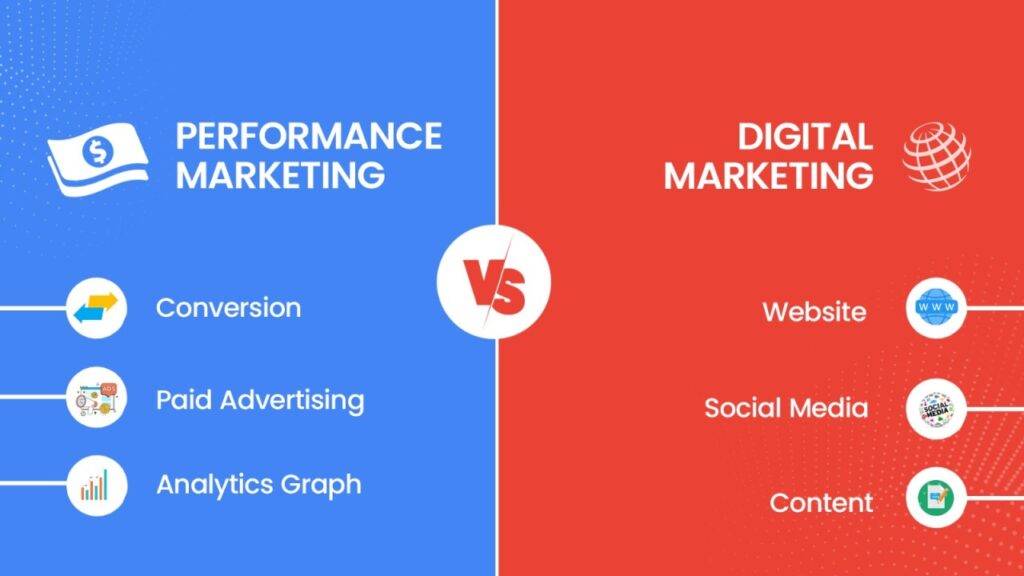
While both strategies operate in the digital space, they have clear differences:
–Scope and Focus:
Digital marketing is comprehensive and involves a variety of channels aimed at long-term brand development. Performance marketing, however, focuses narrowly on driving immediate, quantifiable actions such as sign-ups or purchases.
–Payment Models:
Digital marketing budgets are often allocated for broader exposure—think impressions and content creation—whereas performance marketing relies on models like cost per click (CPC) or cost per action (CPA), meaning you pay only when a desired outcome is achieved.
–Measurement & Timeframe:
Digital marketing success is typically measured by metrics like brand awareness, website traffic, and engagement over time. Performance marketing, in contrast, tracks short-term goals with clear KPIs such as conversion rates and ROI.
Metrics & Measurement Strategies
Understanding the metrics behind each approach is key to optimizing campaigns:
Performance Marketing Metrics
–Cost Per Mille (CPM):
Measures the cost of 1,000 ad impressions. Though more common in brand awareness, it still helps performance marketers gauge reach.
–Cost Per Click (CPC):
The amount spent each time an ad is clicked, critical for paid search and social campaigns.
–Cost Per Action (CPA):
Tracks the cost for a specific conversion (e.g., sale, form submission), ensuring every dollar contributes to measurable results.
–Lead Generation & Conversion Rates:
The number and quality of leads and conversions provide insight into campaign effectiveness.
Digital Marketing Metrics
–Bounce Rate & Page Views:
Assess website engagement and content relevance.
–Click-Through Rate (CTR):
The ratio of clicks to total views indicates the effectiveness of calls-to-action and content appeal.
–Brand Awareness Metrics:
Social mentions, share of voice, and sentiment analysis help gauge overall market presence.
Types of Digital Marketing Channels
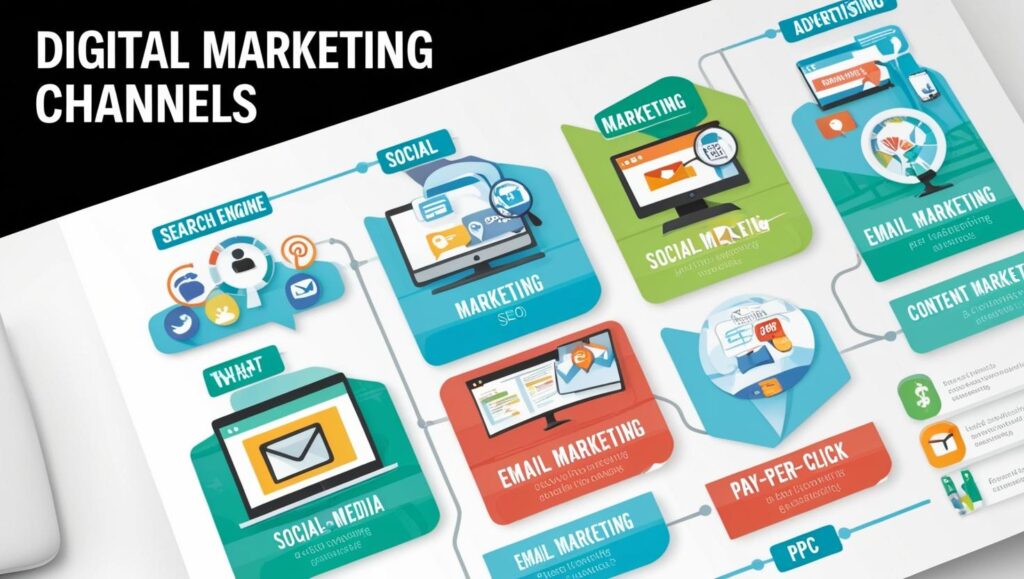
Digital marketing leverages multiple channels to build a lasting presence:
–Search Engine Optimization (SEO):
Optimizes website content to rank higher on search engine results. For example, Airbnb famously improved its organic traffic and brand trust by curating authentic, user-generated content that helped users find unique stays.
–Social Media Marketing:
Platforms like Facebook, Instagram, and TikTok enable brands to engage audiences through both paid and organic posts. Dove’s Real Beauty Sketches campaign is a prime example where emotional storytelling was amplified via social media to foster deep connections.
–Content Marketing:
Creating high-quality content that educates and engages. Case in point: Nike uses inspiring storytelling and dynamic content to build brand loyalty while driving sales.
–Email Marketing & Paid Advertising:
Personalized emails and targeted ads can nurture leads over time. Techniques such as these were pivotal in Headway’s strategy—an edtech startup that boosted its ad ROI by 40% through AI-enhanced video ads.
Types of Performance Marketing Channels
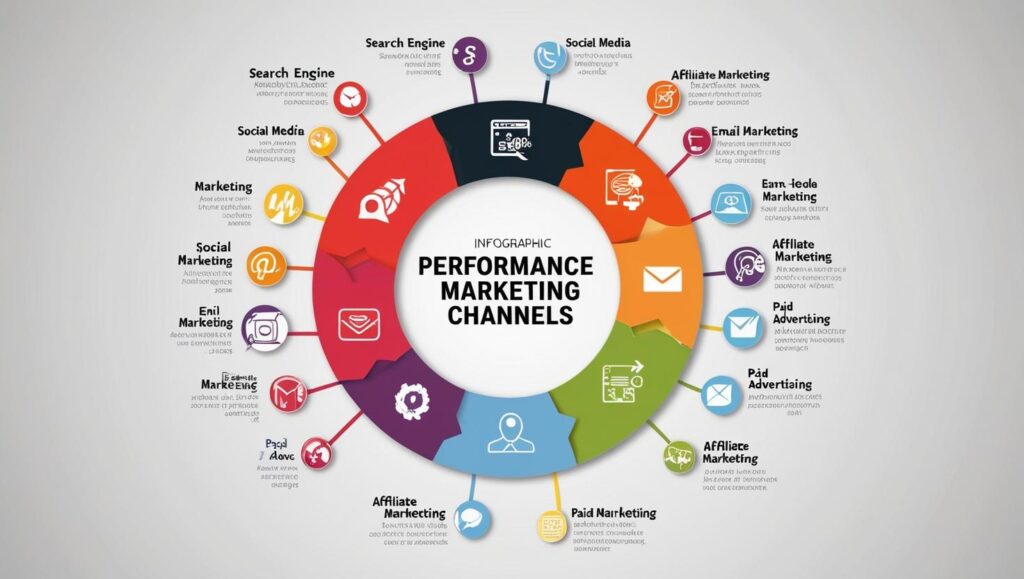
Performance marketing channels are designed to deliver quick, trackable results:
–Search Ads & PPC Campaigns:
Platforms like Google Ads deliver instant traffic and measurable outcomes. Dropbox utilized a referral-based performance model that rewarded users with extra storage, significantly boosting their conversion rates and user base.
–Social Performance Marketing:
Paid ads on social media that target specific demographics. For instance, Domino’s in India effectively used social media campaigns, such as its Friendship Day promotion, to drive both in-store and online traffic with highly engaging, action-oriented content.
–Affiliate & Influencer Marketing:
Collaborations where influencers are paid based on performance. Unilever’s influencer strategy, which shifted from traditional ads to leveraging authentic voices like Mrs Hinch, highlights how brands can achieve significant engagement and ROI by tapping into trusted networks.
–Email & Display Advertising:
Direct marketing methods that prompt immediate responses. These are often optimized in real time based on data, ensuring budget is spent on high-performing elements.
Real-World Examples & Case Studies
Let’s examine some real-world case studies that exemplify these strategies:
Case Study 1: Airbnb – Building Trust Through User-Generated Content
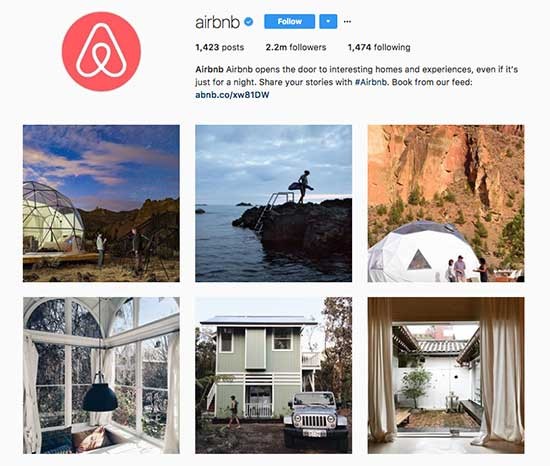
Airbnb faced the challenge of building trust in a competitive travel market. Rather than relying solely on polished advertisements, they empowered users to share their authentic travel experiences. By showcasing genuine reviews, photos, and stories, Airbnb was able to establish an emotional connection with potential customers, resulting in exponential growth in both bookings and brand loyalty. This digital marketing strategy demonstrates the power of community-driven content in building a credible and engaging brand.
Case Study 2: Dropbox – Performance Through Referral Marketing
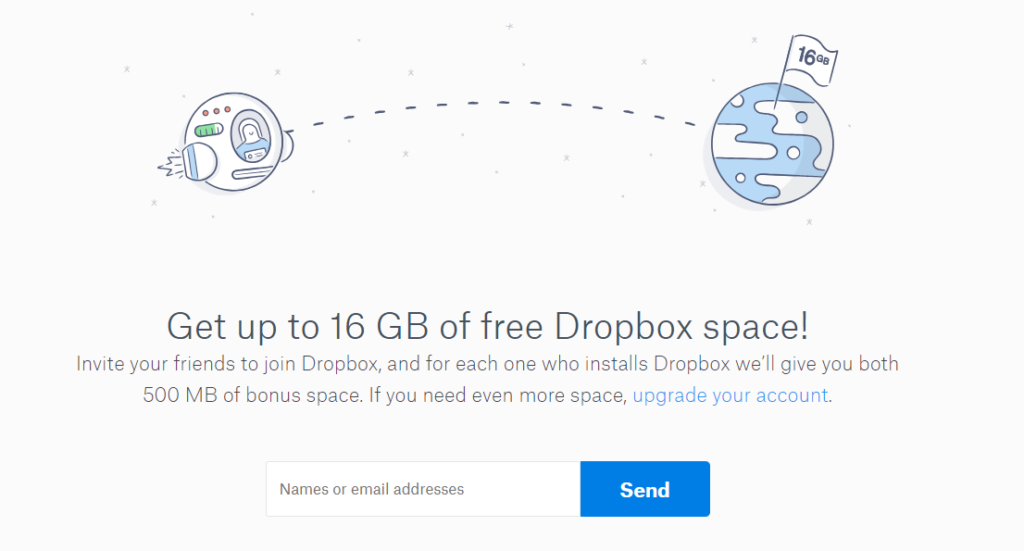
Dropbox’s rapid growth is often cited as a textbook example of performance marketing. The company introduced a referral program where both the referrer and the new user received additional free storage. This pay-for-performance strategy not only lowered customer acquisition costs but also created a viral loop that propelled Dropbox from a small startup to a global brand. Every referral was tracked and rewarded, making the marketing spend directly tied to tangible outcomes.
Case Study 3: Domino’s – Social Performance Marketing in Action
In India, Domino’s launched a highly targeted performance marketing campaign on social media during Friendship Day. By focusing on the emotional element of sharing the “last slice of pizza” with friends, the campaign drove significant online engagement and increased foot traffic to physical stores. This approach capitalized on the immediacy of social media to convert online interactions into real-world sales, exemplifying the quick wins associated with performance marketing.
Case Study 4: Headway – AI-Driven Marketing for Enhanced ROI
Headway, a Ukrainian edtech startup, turned to AI tools like Midjourney and HeyGen to revolutionize its ad production. Initially hesitant about AI, CEO Anton Pavlovsky’s company implemented a rigorous, company-wide AI strategy. The result? A 40% increase in ROI for video ads, reaching 3.3 billion impressions in just six months. By using AI to optimize production costs and tailor content dynamically, Headway demonstrated how performance marketing can evolve with technology to deliver superior, measurable outcomes.
Case Study 5: Unilever – Influencer Marketing Revolution

Unilever recently shifted its advertising focus from traditional methods to an influencer-driven strategy. With skepticism around corporate messages, Unilever increased its influencer budget dramatically. By engaging micro-influencers like Mrs Hinch—who built her brand on relatable cleaning tips—the company achieved a remarkable boost in both engagement and sales. This real-world example highlights how performance marketing can leverage trusted voices to drive targeted results.
Conclusion & Future Trends
In summary, Digital Marketing is ideal for long-term brand building through diversified channels like SEO, social media, and content marketing, while Performance Marketing hones in on direct, measurable outcomes using tactics such as PPC, referral programs, and influencer collaborations. Real-world examples from Airbnb, Dropbox, Domino’s, Headway, and Unilever illustrate that each approach has its own strengths and can be integrated for maximum impact.
Looking ahead, emerging technologies—especially AI and machine learning—are set to further blur the lines between these strategies. As marketers become more adept at using data-driven insights, we can expect even more personalized, efficient, and measurable campaigns. Brands that successfully combine the expansive reach of digital marketing with the precision of performance marketing will be best positioned to thrive in an increasingly competitive landscape.
At Balistro, we specialize in helping businesses grow through effective digital marketing strategies. From Google Ads to Meta Ads, we deliver data-driven campaigns that maximize your ROI and drive real results. If you’re looking to boost your online presence, generate leads, or scale your e-commerce business, our expert team is here to help. Contact us today to learn more about how we can support your advertising needs!
Ready to Grow Your Business?
Book a free 30-minute strategy call with Balistro. We’ll audit your marketing and show you exactly where your biggest growth opportunities are.
The Difference Between Digital Marketing and Performance Marketing: Practical Scenarios
Understanding the difference between digital marketing and performance marketing becomes clearest when you look at how real brands apply each approach. Consider two brands launching a new product:
Brand A uses digital marketing: They create a content plan — blog posts, Instagram reels, YouTube videos, and a LinkedIn thought leadership series. Over six months, they build brand recognition, accumulate organic search traffic, and grow an engaged social following. When they eventually run paid ads, their warm audience converts at a much lower cost because trust has been established.
Brand B uses performance marketing: They launch Google Search campaigns targeting high-intent keywords and Meta conversion ads targeting lookalike audiences from past buyers. Within two weeks, they have data on cost-per-acquisition, and within 30 days they’re scaling the campaigns that work and cutting the ones that don’t. Revenue is measurable from day one.
Neither approach is wrong. Brand A is building an asset. Brand B is generating revenue fast. The best-performing brands do both simultaneously — using digital marketing to build the brand moat while using performance marketing to drive immediate results.
How Digital Marketing and Performance Marketing Work Together
Treating these as competing strategies is a false choice. In practice, digital marketing and performance marketing are most powerful when integrated:
- SEO feeds paid search. High-ranking organic content tells you which keywords your audience searches. Those same keywords should be in your Google Ads campaigns. Organic ranking also reduces your dependence on paid traffic over time.
- Content marketing feeds retargeting. Blog readers, video viewers, and social followers are warm audiences. Facebook and Instagram retargeting campaigns shown to these audiences consistently outperform cold-audience campaigns by 30–60%.
- Email marketing bridges both. Email sits at the intersection — it’s a digital marketing channel (brand building, relationship nurturing) that is also measurable by revenue generated per email, making it highly performance-oriented.
- Data analytics makes the integration work. Without unified analytics, you can’t see which digital marketing channel is warming up the audiences that performance campaigns convert. Attribution clarity is what unlocks integrated strategy.
Choosing the Right Approach for Your Business Stage
The right balance between digital marketing and performance marketing depends heavily on where your brand is in its growth journey:
- Early stage (0–12 months, limited brand awareness): Lean heavily into performance marketing to prove unit economics. Run search and social conversion campaigns to find your best-converting audience. Invest in basic SEO and content simultaneously so the brand equity starts compounding.
- Growth stage (12–36 months, some brand recognition): Begin increasing digital marketing investment — content, SEO, social media, email list building. These channels reduce CAC over time and create resilience against ad platform changes (iOS updates, algorithm shifts).
- Scale stage (3+ years, established brand): Full funnel integration with significant TOFU investment. At this stage, brand equity meaningfully reduces performance marketing CPAs. Users search for you by name, your email list converts at high rates, and organic traffic drives a meaningful portion of revenue without paid spend.
Frequently Asked Questions: Digital Marketing vs Performance Marketing
What is the main difference between digital marketing and performance marketing?
Digital marketing is a broad category encompassing all online marketing activities — SEO, content, social media, email, and paid advertising. Performance marketing is a subset that focuses specifically on campaigns where you pay for measurable results (clicks, leads, sales). The key difference is focus: digital marketing includes brand building and awareness; performance marketing is oriented around direct, trackable return on ad spend.
Is performance marketing better than digital marketing?
Neither is universally better — they serve different purposes. Performance marketing delivers faster, measurable ROI and works best for brands with clear conversion goals. Digital marketing builds long-term brand value, organic traffic, and customer loyalty that reduce your dependence on paid channels over time. Most successful brands combine both strategies rather than choosing one exclusively.
What are examples of performance marketing channels?
The most common performance marketing channels include Google Search Ads (pay-per-click), Meta conversion campaigns (Facebook and Instagram), affiliate marketing, and retargeting campaigns. These channels share a defining characteristic: you set a specific action you want users to take, and you can precisely measure the cost of that action.
How do I know which approach is right for my brand?
If you need revenue fast and your product has an established market, start with performance marketing. If you’re building a new category or a brand that competes on trust and relationship (premium, B2B, services), invest in digital marketing from day one. In most cases, a hybrid approach — performance marketing for short-term revenue plus digital marketing for long-term equity — produces the best outcomes. A digital marketing consultation can help you map the right mix for your specific goals and budget.
Can a small business afford both digital marketing and performance marketing?
Yes. With a modest budget, small businesses can run performance campaigns on a small daily spend (even ₹500–1,000/day on Google or Meta) while simultaneously investing in low-cost digital marketing activities like SEO blog content, organic social posting, and email list building. The combination creates a foundation that becomes more efficient over time as the brand grows and organic channels deliver more traffic without incremental spend.