Meta Ads can be a powerful tool for reaching your ideal customers—but when your campaigns don’t deliver, it can feel like you’re stuck in a never-ending loop of wasted spend and frustration. In this post, we dive into common issues that lead to underperforming Meta Ads and share actionable solutions that you can implement right away.
Introduction: Why Your Meta Ads Aren’t Working
Many advertisers pour their hard-earned dollars into Meta Ads expecting impressive results, only to find their campaigns lagging—low click-through rates, high costs, and little conversion. Whether it’s due to outdated creative, misaligned targeting, or technical glitches, these issues can quickly derail your ad performance.
In the following sections, we’ll break down common pitfalls, discuss key performance metrics, and provide you with step-by-step fixes to troubleshoot your Meta Ads so you can turn those underperforming campaigns into success stories.
Common Issues with Meta Ads
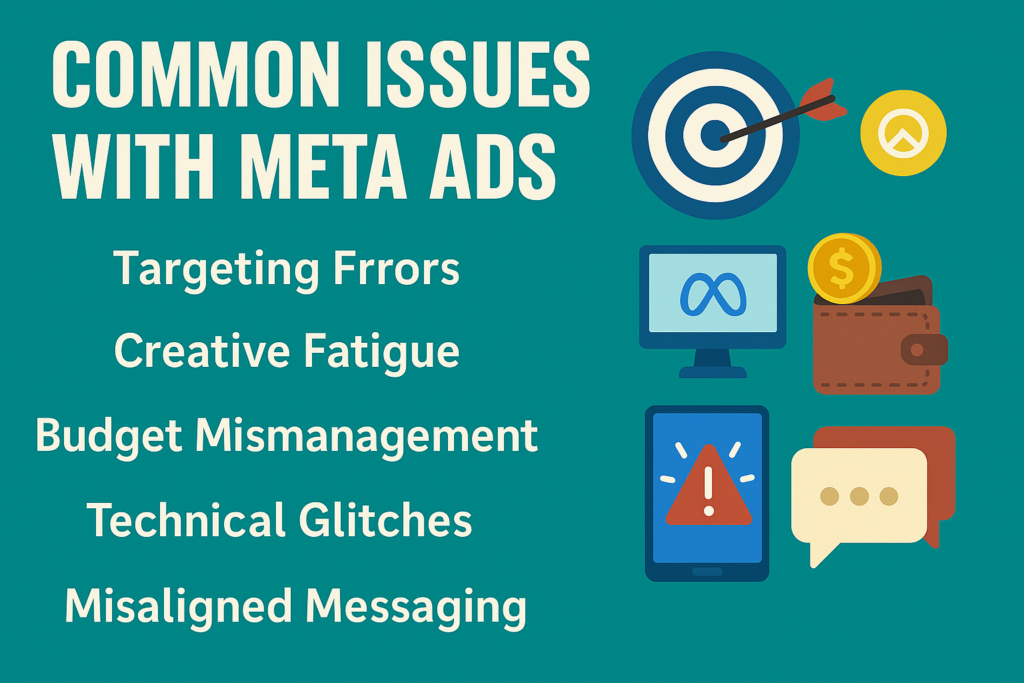
Before we jump into solutions, it’s crucial to understand the typical reasons behind underperforming campaigns. Here are some of the most common problems:
–Targeting Errors:
If your ad isn’t reaching the right audience, even the most enticing creative won’t make an impact. Overly broad or misaligned targeting can result in wasted impressions and poor engagement.
–Creative Fatigue:
Ads that run for too long without refreshment tend to lose their luster. Viewers become desensitized, and engagement drops. Constantly recycling the same creative assets can lead to diminishing returns.
–Budget Mismanagement:
Incorrect budget allocation—whether too little to reach your audience or too much on underperforming ad sets—can cripple your campaign’s potential. It’s essential to monitor spend and reallocate funds to the best-performing segments.
–Technical Glitches:
Issues such as broken links, slow landing pages, or improper pixel setups can prevent your ads from tracking the right data or converting leads effectively.
–Misaligned Messaging:
Your ad copy and visuals need to clearly communicate your value proposition. If your messaging is vague or fails to address your target audience’s pain points, engagement and conversions will suffer.
Understanding these issues is the first step toward troubleshooting and fixing your Meta Ads.
Analyzing Your Meta Ads Performance
Understanding your campaign metrics is vital in pinpointing what’s working—and what isn’t. Here are the key performance indicators (KPIs) you should be monitoring:
1. Click-Through Rate (CTR)
CTR measures the percentage of people who click on your ad after seeing it. A low CTR is often a sign that your creative isn’t resonating with your audience or that your targeting is off.
2. Conversion Rate
Conversion rate is the percentage of clicks that lead to a desired action, such as a purchase or signup. Even if your CTR is high, a low conversion rate indicates that the landing page or lead qualification process isn’t effective.
3. Cost Per Lead (CPL) and Cost Per Acquisition (CPA)
Monitoring CPL and CPA helps determine if you’re spending too much for leads that don’t convert. If these costs keep rising, it’s a major red flag prompting a closer look at your targeting and qualification processes.
4. Frequency and Ad Fatigue
Ad frequency indicates how many times the same user sees your ad. High frequency without a corresponding increase in engagement typically means your audience is becoming saturated with your creative—an issue that calls for a refresh.
Regularly reviewing these metrics will help you identify where your campaign is falling short and guide your troubleshooting efforts.
Tips to Fix Your Meta Ads Issues
Based on common challenges and expert recommendations, here are some actionable tips to troubleshoot and fix your Meta Ads:
1. Refine Your Targeting Settings
–Narrow Your Audience:
Instead of casting a wide net, refine your targeting to focus on demographics, interests, and behaviors that align with your brand. This reduces wasted impressions and increases lead quality.
–Utilize Lookalike Audiences:
Use data from your best customers to create lookalike audiences, ensuring your ads reach people similar to those who already convert.
–Test Broad vs. Detailed Targeting:
Experiment with both broad and refined targeting to find the optimal balance for your campaign’s goals.
2. Enhance Your Lead Qualification Process
–Update Lead Forms:
Incorporate qualifying questions that help filter out unqualified leads. Simple questions about purchase intent or timeline can make a huge difference.
-Implement Progressive Profiling:
Instead of asking for all details upfront, use a series of questions over multiple touchpoints to build a complete picture of your prospect.
–Use Retargeting to Nurture Leads:
Once you have qualified leads, retarget them with ads addressing their specific pain points, guiding them gently toward conversion.
3. Refresh Your Ad Creative Regularly
–Rotate Creative Assets:
To combat creative fatigue, update your images, videos, and ad copy regularly. Even minor tweaks can re-engage your audience.
–Test Different Formats:
Experiment with carousel ads, video ads, and static images to see which format drives better engagement for your brand.
–Ensure Consistent Messaging:
Your creative should clearly communicate your product’s benefits and unique value proposition. Consistency builds trust and drives conversions.
4. Monitor and Adjust Your Budget
–Reallocate Spend:
Shift your budget toward high-performing ad sets and pause or adjust those that are underperforming. Continuous monitoring is key.
–Set Performance Rules:
Use Meta’s automated rules in Ads Manager to get notifications when your KPIs drop below acceptable levels. This proactive approach helps catch issues early.
5. Optimize Your Landing Pages
–Align Landing Pages with Ad Messaging:
Your landing page should extend the story told in your ad. A mismatch can lead to confusion and drop-offs.
–Improve Page Load Times:
Ensure your landing page loads quickly, especially on mobile devices. Slow pages can increase bounce rates and lower conversions.
–Include Clear Calls-to-Action (CTAs):
Make your CTA prominent and persuasive, guiding visitors toward the next step.
Best Practices for Meta Advertising
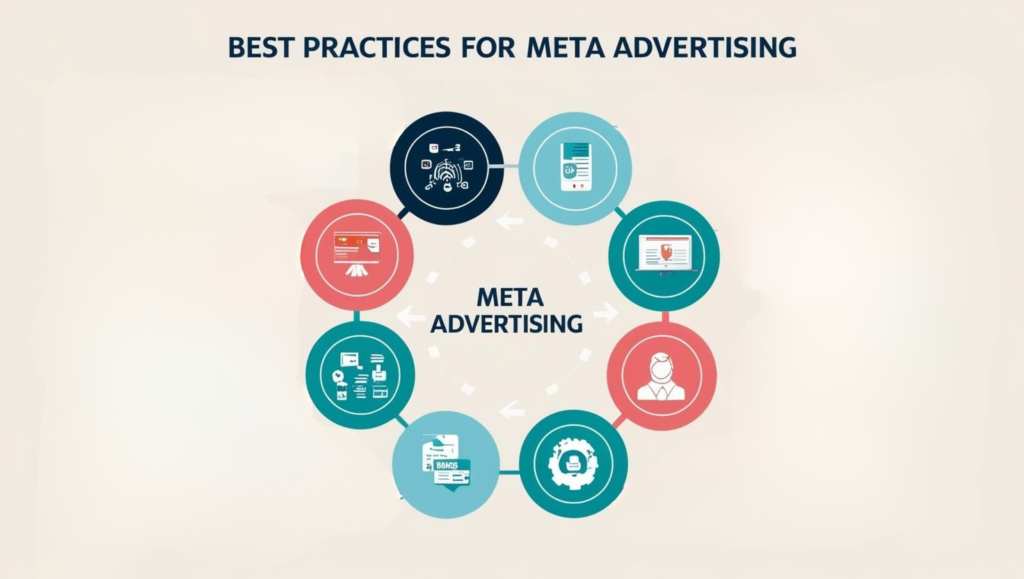
To maintain long-term success with Meta Ads, integrate continuous optimization into your strategy. Here are some best practices:
1. Develop a Clear Strategy for Meta Ads
–Set Measurable Goals:
Define what success looks like—whether it’s increasing conversions, building your email list, or driving sales—and set clear KPIs to track progress.
–Understand Your Audience:
Use data-driven insights to build detailed buyer personas. The better you understand your audience, the more effectively you can target them.
2. Craft Compelling Creative for Meta Ads
–Invest in High-Quality Visuals:
Professional images and videos make a significant difference in capturing attention and stopping the scroll.
–Write Clear, Benefit-Driven Copy:
Your ad copy should address your audience’s pain points directly and offer clear solutions. Keep it conversational and avoid jargon.
3. Test, Learn, and Adapt
–A/B Testing:
Continuously test different versions of your ads to understand what works best. Small changes in copy, image, or CTA can have a significant impact.
–Review Data Regularly:
Keep an eye on your performance metrics and be prepared to adjust your strategy based on what the data shows.
–Stay Updated on Platform Changes:
Meta frequently updates its advertising platform. Keeping up with these changes can give you a competitive edge.
Conclusion
The journey to effective Meta Ads isn’t always straightforward. Even if your campaigns generate a high volume of leads, poor targeting and unqualified traffic can leave you frustrated. By refining your targeting, enhancing your lead qualification process, refreshing your creative, and closely monitoring performance metrics, you can transform underperforming campaigns into successful ones.
Remember, the digital advertising landscape is constantly evolving. What worked last month might not work today, so continuous testing and optimization are key. With a data-driven approach and a willingness to adapt, you can overcome Meta Ads performance issues and achieve the results your business deserves.
Happy advertising—and here’s to turning your Meta Ads into a success story!
At Balistro, we specialize in helping businesses grow through effective digital marketing strategies. From Google Ads to Meta Ads, we deliver data-driven campaigns that maximize your ROI and drive real results. If you’re looking to boost your online presence, generate leads, or scale your e-commerce business, our expert team is here to help. Contact us today to learn more about how we can support your advertising needs!
Ready to Grow Your Business?
Book a free 30-minute strategy call with Balistro. We’ll audit your marketing and show you exactly where your biggest growth opportunities are.
Why Facebook & Instagram Advertising Is Critical for Brand Growth
Meta’s advertising platforms reach over 400 million users in India alone, making Facebook and Instagram the largest social advertising ecosystem in the country. For D2C brands, these platforms offer unparalleled targeting capabilities — from interest-based audiences to lookalike modeling based on your highest-value customers.
The introduction of Advantage+ campaigns and AI-powered creative optimization has transformed Meta advertising in 2026. Brands that leverage these tools effectively are seeing 20-35% improvements in cost efficiency compared to manual campaign management. The algorithm’s ability to identify high-intent users across Facebook, Instagram, Messenger, and the Audience Network means your ads reach the right people at the right moment.
For e-commerce and D2C brands specifically, Meta’s shopping features — including dynamic product ads, Instagram Shop, and in-app checkout — create a seamless path from discovery to purchase. This full-funnel capability makes Facebook and Instagram advertising one of the most effective channels for customer acquisition and retention.
How to Build a High-Performing Meta Ads Strategy
Creating successful Facebook and Instagram ad campaigns requires a structured approach to audience targeting, creative testing, and budget optimization. Here’s the framework Balistro uses for D2C and B2B clients:
- Audience Strategy & Segmentation: Build a layered audience strategy: cold audiences (interests + lookalikes), warm audiences (website visitors, video viewers, engagers), and hot audiences (add-to-cart, past purchasers). Use Meta’s Advantage+ audience expansion to discover new high-value segments automatically.
- Creative Framework: Develop 5-10 creative variations per ad set testing different hooks, formats, and messaging angles. Use a mix of static images, carousels, video (under 15 seconds for best performance), and UGC-style content. Refresh creatives every 2-3 weeks to combat ad fatigue.
- Campaign Structure: Use Advantage+ Shopping campaigns for e-commerce and manual campaigns for B2B lead generation. Structure campaigns by objective — prospecting (awareness/traffic), retargeting (consideration), and conversion — with separate budgets for each stage.
- Conversion Tracking: Implement the Meta Pixel and Conversions API for accurate server-side tracking. Set up custom conversions for each stage of your funnel. Use UTM parameters for cross-platform attribution in Google Analytics.
- Budget Optimization: Start with campaign budget optimization (CBO) and let Meta’s algorithm distribute budget across ad sets. Allocate 60% to proven audiences and 40% to testing. Scale winning ad sets by 20-30% every 3-4 days to maintain performance.
Facebook Ads Mistakes That Kill Your ROAS
After managing ₹40 lakh+ in monthly Meta ad spend, here are the most expensive mistakes Balistro’s team sees brands making:
- Too many ad sets competing against each other: Running 10+ ad sets with overlapping audiences causes auction overlap and drives up costs. Consolidate audiences and let Meta’s algorithm optimize delivery across segments.
- Ignoring the learning phase: Each ad set needs approximately 50 conversion events per week to exit the learning phase. Making frequent changes to targeting, budget, or creatives resets this learning, leading to inconsistent performance and higher costs.
- Not testing creative formats: Many brands only use static images. Video ads, carousel ads, and collection ads often outperform static images by 30-50% in engagement and conversion metrics. Test all formats systematically.
- Wrong optimization event: Optimizing for link clicks instead of purchases or leads attracts low-intent users. Always optimize for the conversion event closest to your business goal, even if it means a smaller audience size.
- Neglecting retargeting: Retargeting audiences convert 3x better than cold audiences. Brands that don’t have proper retargeting funnels — abandoned cart, product viewers, past purchasers — leave significant revenue on the table.
Frequently Asked Questions
What is a good CTR for Facebook Ads?
The average CTR for Facebook Ads across industries is 0.90%, but top-performing campaigns achieve 2-5%. For D2C e-commerce, aim for 1.5%+ CTR on prospecting and 3%+ on retargeting. Low CTR usually indicates poor creative-audience alignment — test new creative angles and audience segments to improve.
How much should I spend on Facebook Ads per month?
For meaningful results, most D2C brands need ₹25,000-75,000 per month as a starting budget. This allows enough data collection for the algorithm to optimize effectively. B2B brands can start lower at ₹15,000-30,000 since their conversion values are typically higher. Scale budget based on ROAS — if you’re profitable, increase spend systematically.
When should I use Advantage+ vs manual campaigns?
Advantage+ Shopping campaigns work best for e-commerce brands with established pixel data and a product catalog. They automate audience targeting and placement optimization. Manual campaigns give more control and are better for B2B lead generation, brand awareness campaigns, or when you need to target very specific audiences. Most brands benefit from running both simultaneously.
Ready to Grow Your Business?
At Balistro Consultancy, we help D2C and B2B brands achieve measurable marketing results through data-driven strategies. Whether you need Google Ads management, Facebook advertising, SEO services, or email marketing, our team of certified specialists is ready to help you grow.
Book a free consultation call to discuss your marketing goals and discover how Balistro can drive real results for your brand.