
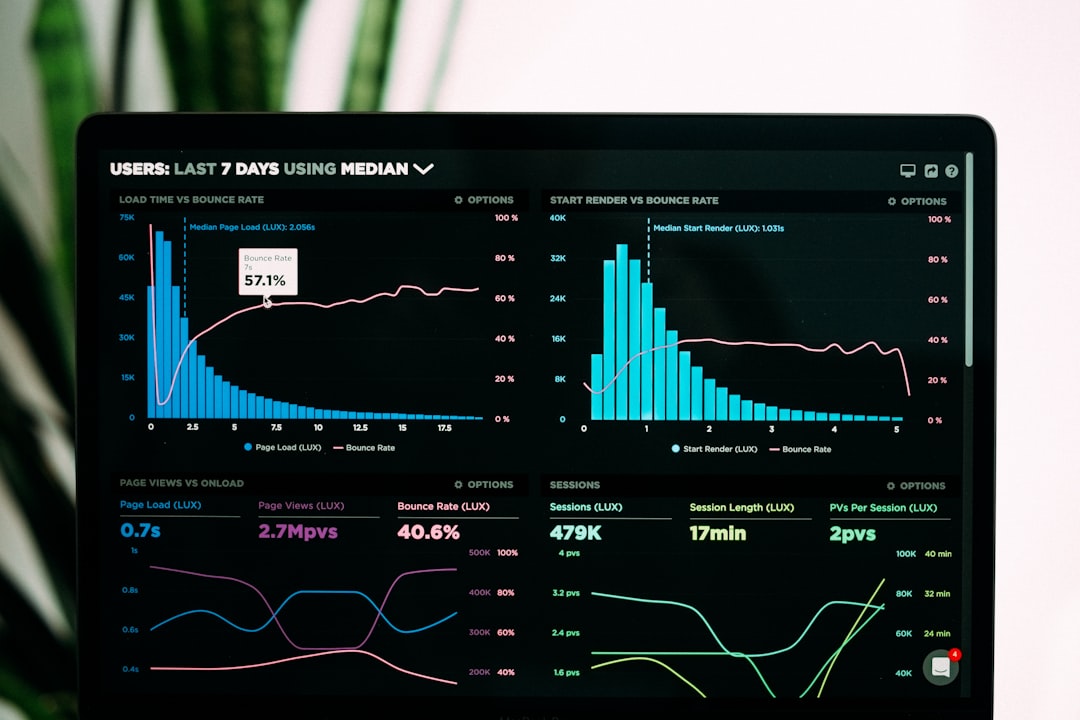
In today’s fast‑paced digital ecosystem, businesses can no longer afford to rely on gut instinct when allocating marketing budgets. Instead, every campaign must be accountable, data‑driven, and adaptable and that’s precisely where a performance marketing agency comes in. Unlike traditional firms that charge for impressions or creative hours, performance partners tie their fees directly to outcomes like leads, sales, or app installs, ensuring you only pay for tangible results.
The rise of generative AI and hyper‑personalization has made it possible to deliver the right message to the right audience at the right moment, maximizing ROI and minimizing wasted spend. By outsourcing to specialists who live and breathe data analytics, you gain access to advanced tools and expertise without the overhead of building an in‑house team so your campaigns stay ahead of the curve in 2025’s competitive landscape.
What Is Performance Marketing?
Performance marketing is a results-oriented approach where agencies execute campaigns across channels such as search, social ads, affiliate networks, and programmatic display and are compensated based on verified outcomes (e.g., clicks, conversions, sales). This contrasts with models that charge flat fees, retainers, or CPM rates regardless of performance.
Key to performance marketing is continuous optimization: campaigns are monitored in real time, with bids, targeting, and creative rotated based on what drives the most value per dollar. As a business, this means your ad spend is always directed toward top‑performing audiences and placements, lowering your cost‑per‑acquisition while boosting overall ROI.
Top Benefits of Working with a Performance Marketing Agency

Working with a performance marketing agency delivers multiple advantages that go beyond what a typical digital marketing agency offers. Here are the top benefits:
1. Data‑Driven Strategy and Accountability
Performance agencies craft campaigns based on deep data analysis, from customer journey mapping to predictive modeling. Every dollar you invest is tracked against KPIs like cost per acquisition (CPA) and return on ad spend (ROAS), ensuring full transparency and accountability.
2. Cost‑Per‑Acquisition Optimization
By focusing on CPA as the primary metric, these agencies continuously optimize bidding strategies and ad placements to lower your average acquisition cost. This cost‑per‑acquisition strategy ensures you’re not overpaying for clicks or impressions.
3. Access to Advanced Tools and Expertise
Top agencies invest in premium analytics platforms, machine‑learning bid managers, and proprietary attribution models. You gain instant access to these resources plus seasoned specialists who know how to extract actionable insights without the capital expense of assembling your own tech stack.
4. Scalability and Flexibility
Whether you’re testing a new product or scaling a peak‑season campaign, performance teams can ramp spend up or down in real time, reallocating budgets to the channels and audiences driving the best ROI. This flexibility is critical for navigating unpredictable market shifts in 2025.
How Performance Marketing Differs from Traditional Digital Marketing
Traditional digital marketing often emphasizes brand awareness through metrics like impressions, reach, or viewability, with payment models based on CPM or flat fees. Campaigns might run for a set period or budget, with results evaluated retrospectively.
Performance marketing flips this dynamic: you pay for measurable marketing results, such as leads generated or sales completed, linking investment directly to business outcomes. This real‑time feedback loop enables agencies to optimize on the fly, maximizing ROAS and minimizing waste, unlike traditional agencies that may only adjust strategies monthly or quarterly.
Key Metrics a Performance Marketing Agency Tracks
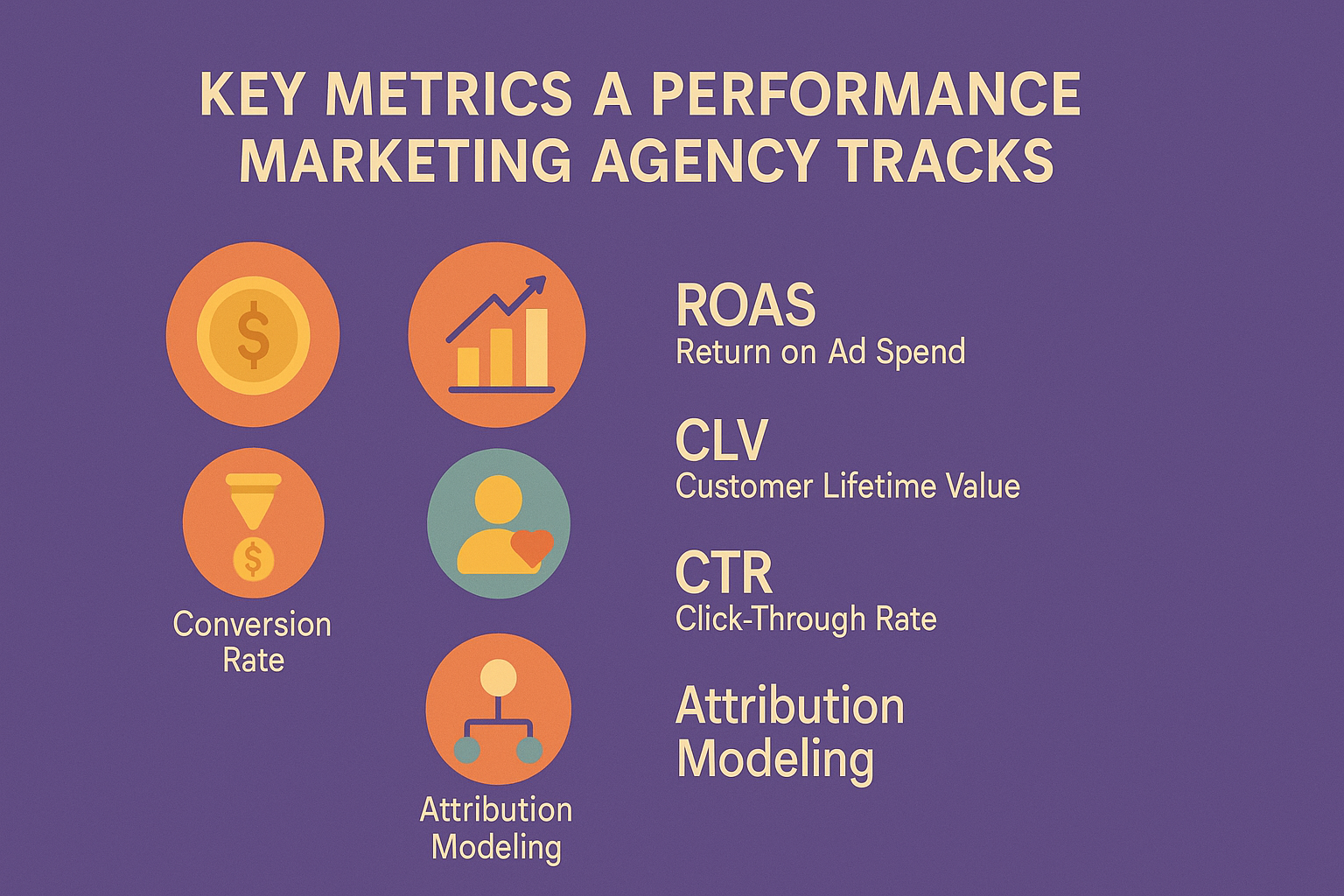
A good performance marketing agency will monitor a suite of KPIs to gauge both efficiency and growth impact:
–Cost per Acquisition (CPA): The average spend required to acquire a customer or lead.
–Return on Ad Spend (ROAS): Revenue generated for every dollar spent on ads.
–Customer Lifetime Value (CLV): Projected revenue from a customer over their relationship with your brand.
–Conversion Rate: Percentage of users who complete a desired action (e.g., purchase, sign‑up).
–Click‑Through Rate (CTR): Ratio of clicks to impressions, indicating ad engagement levels.
–Attribution Modeling: Multi‑touch attribution to understand which channels and touchpoints drove conversions.
Tracking these metrics in concert provides a holistic view of your marketing funnel’s health and highlights areas for optimization.
How to Choose the Right Performance Marketing Agency for Your Business in 2025
Selecting the ideal partner involves more than glitzy pitch decks. Consider these factors:
1. Industry Expertise: Look for agencies with proven experience in your vertical; they’ll understand audience nuances and compliance needs.
2. Technology Stack: Ensure they leverage advanced analytics, AI‑driven bidding platforms, and robust attribution tools.
3. Pricing Model: Compare CPA‑based, revenue‑share, or hybrid fee structures; pick one that aligns incentives with your growth goals.
4. Reporting Transparency: Demand clear dashboards and regular insights, not just summary reports.
5. Scalability: Verify they can scale budgets quickly during peak seasons or new launch phases.
6. Cultural Fit: A collaborative mindset and open communication channels will make long‑term partnership smoother.
Case Study: Acme Apparel’s Success with a Performance Marketing Agency
When Acme Apparel teamed up with a specialist performance agency in early 2024, they faced stagnant online sales despite heavy social media spending. The agency implemented a data‑driven overhaul:
–First‑Party Data Activation: Leveraged customer purchase histories for lookalike targeting, boosting conversion rates by 25%.
–Cross‑Channel Attribution: Implemented a multi‑touch attribution model that reallocated 30% of budget from underperforming display ads to high‑impact search and social campaigns.
–AI‑Optimized Bidding: Applied machine‑learning bid strategies that lowered CPA by 18%.
Within six months, Acme Apparel saw a 40% increase in ROAS and a 20% uptick in overall revenue delivering measurable marketing results that justified the partnership.
Conclusion: Is It Time to Partner with a Performance Marketing Agency?
If your business demands measurable growth, agile budget allocation, and access to cutting‑edge tools and expertise, a performance marketing agency could be the catalyst you need in 2025. By aligning agency incentives with your business outcomes through CPA and ROAS‑driven fee models you ensure every marketing dollar works harder and smarter.
Evaluating agencies based on industry fit, technology capabilities, transparent reporting, and cultural alignment will help you choose a partner equipped to navigate the evolving digital landscape. With key metrics and real‑world case studies demonstrating substantial ROI lifts, now is the perfect moment to explore a performance marketing partnership. Make the switch, track the impact, and watch your business thrive in 2025 and beyond!
Frequently Asked Questions
1. What is a performance marketing agency?
A performance marketing agency is a results-oriented digital partner that only charges for verified outcomes—such as leads or sales—instead of flat fees or hourly rates.
2. How does performance marketing differ from traditional marketing?
Performance marketing ties spend directly to metrics like CPA and ROAS, enabling real‑time optimization, whereas traditional marketing often measures success by impressions or general brand lift.
3. What metrics should I expect a performance marketing agency to track?
Key metrics include CPA, ROAS, CLV, conversion rate, CTR, and attribution/modeling insights to understand channel contributions.
4. How much does it cost to hire a performance marketing agency?
Fees vary: some a flat retainer plus performance bonus, others use revenue‑share (e.g., 10–20% of revenue generated) or pure CPA models (e.g., $20–$50 per lead).
5. When is the right time for a business to hire a performance marketing agency?
Ideal when you’ve tested basic digital channels in‑house but need advanced optimization, scalable budgets, and accountability to hit growth milestones often at $500K+ annual ad spend.
At Balistro, we specialize in helping businesses grow through effective digital marketing strategies. From Google Ads to Meta Ads, we deliver data-driven campaigns that maximize your ROI and drive real results. If you’re looking to boost your online presence, generate leads, or scale your e-commerce business, our expert team is here to help. Contact us today to learn more about how we can support your advertising needs!
Ready to Grow Your Business?
Book a free 30-minute strategy call with Balistro. We’ll audit your marketing and show you exactly where your biggest growth opportunities are.
Why Performance Marketing Is the Growth Engine for Modern Brands
Performance marketing has fundamentally changed how brands approach advertising — shifting from paying for impressions to paying for measurable outcomes like clicks, leads, and sales. This accountability makes every rupee of marketing spend trackable and optimizable, which is why performance-based digital marketing now accounts for 65% of total digital ad spend in India (Source: IAMAI).
For D2C brands in India’s rapidly growing e-commerce market, performance marketing is the primary customer acquisition engine. The ability to test multiple channels — Google Ads, Meta Ads, programmatic, affiliate marketing — and allocate budget to the highest-performing channels in real-time is a competitive advantage that traditional advertising simply cannot match.
The integration of AI and machine learning into performance marketing platforms has accelerated optimization cycles. Automated bidding, dynamic creative optimization, and predictive audience modeling allow brands to achieve better results faster, with algorithms processing thousands of data points to find the most efficient path to conversion.
Building a Performance Marketing Framework That Scales
- Define Clear KPIs & Attribution: Establish your primary KPIs — ROAS for e-commerce, CPL for B2B, CAC for subscription businesses. Set up multi-touch attribution modeling to understand the true contribution of each channel. Avoid last-click attribution which overvalues bottom-funnel channels.
- Channel Mix Strategy: Start with 2-3 channels and expand based on performance data. For most Indian D2C brands, Google Search + Meta Ads is the optimal starting combination. Add Google Shopping, YouTube, and programmatic as you scale. B2B brands should prioritize Google Search + LinkedIn Ads.
- Creative Testing Framework: Develop a systematic creative testing process. Test hooks (first 3 seconds of video, headline of static ads), value propositions, social proof elements, and CTAs. Run 3-5 creative variations per ad set and replace underperformers weekly.
- Budget Allocation & Scaling: Use a 70/20/10 framework — 70% of budget on proven campaigns, 20% on promising tests, 10% on experimental channels. Scale winning campaigns by increasing budget 20-30% every 3-5 days while maintaining ROAS targets.
- Measurement & Optimization Cadence: Review campaign performance daily (budget pacing, anomalies), optimize weekly (bid adjustments, creative swaps, audience refinements), and conduct strategic reviews monthly (channel allocation, funnel analysis, competitive landscape).
Performance Marketing Mistakes That Waste Your Ad Budget
- Optimizing for vanity metrics: Impressions, clicks, and even CTR are vanity metrics if they don’t translate to revenue. Always optimize campaigns for conversion events that align with business outcomes — purchases, qualified leads, or revenue.
- Not investing in landing page optimization: Sending paid traffic to generic homepages or poorly designed landing pages wastes acquisition costs. Create dedicated landing pages for each campaign with clear value propositions, social proof, and frictionless conversion paths.
- Scaling too fast: Dramatically increasing budgets overnight disrupts campaign learning and often tanks performance. Scale gradually — 20-30% budget increases every few days — and monitor performance metrics closely during scaling periods.
- Ignoring the full funnel: Brands that only run bottom-funnel conversion campaigns eventually exhaust their addressable audience. Build awareness and consideration campaigns to feed the top of funnel and create sustainable acquisition growth.
- Poor tracking and attribution: Without accurate conversion tracking across all touchpoints, you can’t make informed optimization decisions. Implement server-side tracking, cross-device attribution, and proper UTM tagging before scaling ad spend.
Frequently Asked Questions
What is a good ROAS for performance marketing?
A good ROAS varies by industry and business model. E-commerce D2C brands typically target 3-5x ROAS, while high-margin businesses can be profitable at 2x. B2B companies often measure success through cost-per-lead rather than ROAS. The key is ensuring your ROAS exceeds your break-even point accounting for product costs, overhead, and customer lifetime value.
How is performance marketing different from digital marketing?
Performance marketing is a subset of digital marketing specifically focused on measurable, results-driven campaigns where you pay for specific outcomes. Digital marketing is broader and includes brand building, content marketing, SEO, and other activities that may not have direct, immediate ROI attribution. Performance marketing prioritizes accountability and data-driven optimization above all else.
How much should I budget for performance marketing?
For D2C brands in India, a starting budget of ₹50,000-₹1,50,000 per month across Google and Meta Ads provides enough data for optimization. B2B brands can start at ₹30,000-₹75,000 per month. Scale budget based on profitability — if campaigns are generating positive ROAS, increase spend systematically to capture more market share.
Ready to Grow Your Business?
At Balistro Consultancy, we help D2C and B2B brands achieve measurable marketing results through data-driven strategies. Whether you need Google Ads management, Facebook advertising, SEO services, or email marketing, our team of certified specialists is ready to help you grow.
Book a free consultation call to discuss your marketing goals and discover how Balistro can drive real results for your brand.